
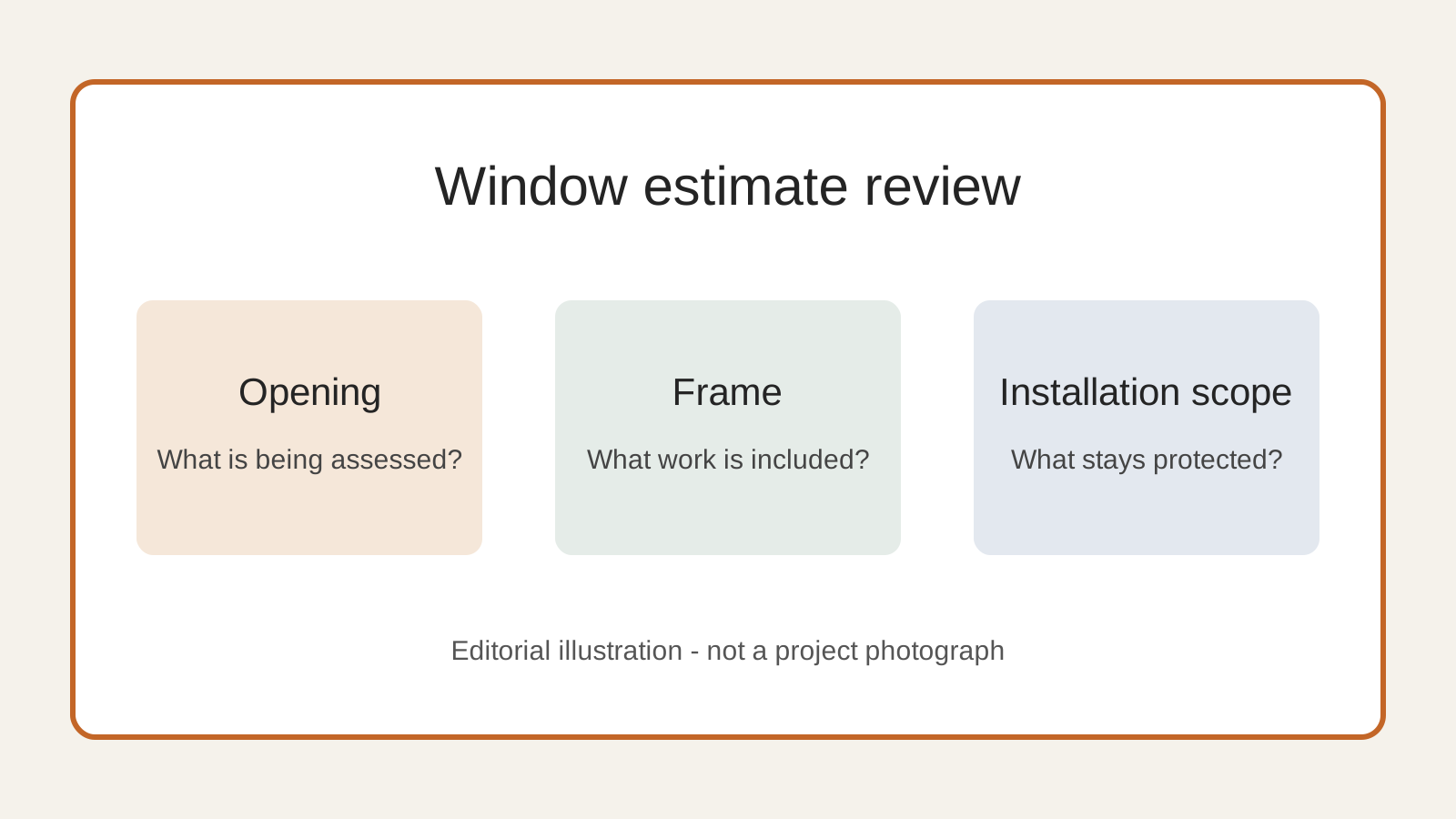
Comparing window replacement estimates before winter starts with a question: does each total describe the same work? Before ranking proposals, ask each contractor to explain the scope for every opening. Use winter as your planning milestone for inspection, selections and scheduling, rather than a prediction about upcoming weather.
For a Longhorn window discussion, bring your estimates and a room-by-room list of concerns. Your goal is a written comparison that explains what stays, what changes and what still needs investigation. Start with the scope, then consider the total alongside the responsibilities and exclusions.
Give every opening a place in the comparison
Assign each window a simple identifier, such as kitchen left or front bedroom. Ask every estimator to use that list. Beside each identifier, record your priority: operation, appearance, a recurring comfort concern or investigation of staining. Describe what you have noticed without deciding the cause yourself.
- Which openings are included and excluded? This establishes the boundary of each proposal.
- What was inspected at each opening, and can the findings be identified in photographs? This connects recommendations to observations.
- Which concerns does the proposed work address, and which need separate evaluation? This makes expectations explicit.
Request an explanation when recommendations differ between rooms. Ask for separate entries instead of accepting one general replacement description for the entire house. Keep unanswered questions beside the affected opening so they remain visible during revisions.
Ask what the inspection established about the frame
PNNL's window sash retrofit guide identifies sill, frame and sash condition as considerations when choosing a window improvement approach. Ask the estimator to point out these components and describe the findings separately, rather than using frame as a catchall term.
The same PNNL guide explains that staining can reflect water infiltration or condensation. Ask what evaluation supports the proposed explanation and what remains uncertain. A useful discussion should distinguish your observations, the contractor's findings and any proposed further investigation.
- What is the observed condition of the sill, frame and surrounding opening? Separate answers make the recommendations easier to compare.
- What evidence supports the explanation for recurring moisture? This clarifies the basis for the proposed scope.
- Which areas remain concealed, and when would they be evaluated? This records inspection limits.
- How would unexpected findings be documented and discussed before additional work proceeds? This establishes a communication process.
For assessment background, consult PNNL's window sash retrofit guide. Use it to prepare questions for the inspection discussion.
Separate glass work from whole-unit replacement
Ask each estimator to identify the proposed approach: glass replacement, sash modification or replacement, an insert retaining the existing frame, or full-frame replacement. Request two written lists for each opening: components retained and components replaced. Avoid treating the word replacement as a complete scope description.
PNNL explains that its sash modification approach does not improve heat transfer through the existing frame or seal leaks around the casings. For a glass or sash proposal, ask which concerns it is intended to address and which remain outside the work.
The DOE window replacement checklist hosted by PNNL distinguishes replacement within an existing frame from full-frame replacement. Its full-frame option includes exposing the rough opening on all four sides. Ask what access each proposal includes, what the contractor intends to evaluate with that access and why the approach was selected.
If two estimates propose different approaches, request an explanation before comparing their totals. Keep both options visible until you understand the reasons for retaining or removing the existing components.
Make installation assumptions part of the estimate
Request an installation description alongside the product selection. Ask the estimator to explain how the proposed work relates to your opening and which details are included. Keep the discussion focused on contractor responsibilities rather than trying to design the installation yourself.
PNNL's flashing guide explains that flashing integrated with the wall's other protective elements can help prevent water damage. Use that principle to ask about the proposed window-to-wall connection.
- What existing flashing will be evaluated, retained or replaced? This identifies the starting assumptions.
- How will the proposed flashing connect with the wall's water protection layer? This requests an opening-specific explanation.
- Where is air sealing included, and what remains outside the scope? This defines the boundaries of the work.
- Which manufacturer installation instructions apply to the quoted selection? Request the reference with the proposal.
Review the DOE checklist hosted by PNNL and PNNL's flashing guide as discussion resources. Ask contractors to explain their proposals in ordinary language.
Request ratings for the actual product selection
Ask for the manufacturer, product line, operating style and selected glass configuration for each opening. Request the corresponding rating documentation and ask the estimator to identify the exact selection within it.
PNNL's sash retrofit guide states that window ratings apply to frames and insulated glass units together. Ask whether the submitted documentation describes the complete proposed window or a glass component.
Bring these questions to the estimator:
- What U-factor and solar heat gain coefficient are documented for this selection? Ask for an explanation of each value and the selection rationale.
- Why was this configuration proposed for this home's climate and each window location? This invites a specific recommendation.
- If the product or glass package changes, will revised specifications be provided before approval? This keeps substitutions reviewable.
Clarify finishing and scheduling before choosing
Ask which interior trim, exterior trim and adjacent finishes are included in removal and restoration. Request separate answers about painting, cleanup, disposal and room protection. Record who is responsible for each item, and ask for exclusions to be written beside the relevant work.
For a winter target, ask when measurements and selections must be finalized, which dates are tentative and how schedule changes will be communicated. Ask how unexpected opening conditions would affect the proposed sequence. Treat these answers as planning information, not a completion promise.
Choose with the unanswered questions in view
Build a comparison sheet with one row per opening and columns for findings, retained components, replacement components, installation details, product documentation, finishing and exclusions. Mark missing answers as unresolved and request written revisions before making your choice.
To start that discussion, review Longhorn's window services and send a window project inquiry. Include your opening list and the scope questions most important to your decision.
Editorial illustration of window estimate review questions; not a project photograph.