
New Concrete Installation
Define the area, use, preparation and specification for a new patio, walk, driveway, slab or other supported flatwork.
Define the Project Before Placement
New concrete, replacement and repair planned around your property, intended use and a written construction scope.
Longhorn Construction Co. defines the concrete project before placement. What will the area be used for? What is already there? How will new work meet adjoining surfaces and handle drainage?
Pedestrian areas, driveways and equipment or utility pads have different requirements. The scope should establish intended use, dimensions, elevations, transitions and applicable specifications before work begins.
Based in Aubrey, Longhorn serves DFW and North Texas, with project capability throughout Texas and nationwide. Learn about Longhorn Construction Co.
Define the area, use, preparation and specification for a new patio, walk, driveway, slab or other supported flatwork.
Identify the sections to remove, disposal, underlying preparation and how replacement work meets existing construction.
Evaluate damage and its cause before choosing a repair. A surface treatment does not necessarily correct settlement or failed support.
Cracks, deterioration, settlement, movement, drainage and adjoining conditions all matter. Not every crack requires replacement, and not every crack can be permanently repaired or made visually invisible.
Residential projects consider access, occupants and surrounding improvements. Commercial flatwork also requires attention to staging, phasing, business operations, dimensions, use and written specifications.
Longhorn manages scope, quality expectations, coordination and the customer relationship using experienced independent subcontractor crews and appropriately licensed providers where required. Any required design or engineering is addressed through project-specific coordination; it is not implied by ordinary slab or pad work. Retaining Walls remain a separate scope and contract authority.
Preparation: the written scope should state the excavation, grading, unsuitable-material removal, fill, subgrade preparation, compaction and base material included for the actual site. Not every site needs identical preparation.
Thickness and concrete specification: intended use, anticipated loading, site conditions, adjoining construction and project requirements guide the selection. There is no single thickness or PSI specification for every project, and PSI alone does not determine durability.
Reinforcement: rebar, welded-wire reinforcement, fiber and dowels/tie-ins are selected where appropriate, with applicable sizes and spacing defined for the work. No method is universally required or superior, and reinforcement does not prevent all cracking.
Concrete elevations and slope should account for nearby structures, adjoining concrete, surrounding grades, existing drainage and discharge points. The scope does not promise to eliminate all standing water or correct drainage beyond the contracted area.
Changes to gutters, downspout discharge or drainage systems, French drains, underground drainage and broader grading are included only when separately scoped.
Forms, edges, control joints, saw cuts and expansion/isolation joints follow project geometry and specification. Joints help manage movement and crack location; they do not guarantee that every crack is prevented or follows a joint.
Access and adjoining improvements may require coordination, including garage floors, landscaping and fences or gates near the work. The written scope identifies included protection and tie-in work.
Project-specific choices include broom, smooth/trowel, exposed aggregate, stamped and stained concrete, along with other decorative/specialty finishes when selected for the work. The finish affects appearance, texture, use, maintenance and price.
Patterns, colors and finishes should be confirmed for the application. Sealer is project-specific and is not automatically included. Stamped or stained concrete does not carry a universal cost-saving or maintenance-free promise.
New concrete and repaired areas may not exactly match adjoining aged concrete. Mix, age, curing, weather, finish and surrounding materials can affect appearance.
Site/support conditions, shrinkage, temperature, moisture, loading, drainage and adjoining construction can affect cracking or movement. These possibilities do not mean every crack is harmless or automatically outside workmanship coverage.
Saw cutting, concrete breakup/removal, haul-off, disposal and preparation for replacement can be included when specified and priced. They are not automatic inclusions in every project.
Access affects demolition, excavation, material movement and placement. Concrete-truck, pump or manual-access arrangements depend on the site and scope; no single method applies to every project.
Removal or excavation may expose unsuitable material, buried construction, private systems, drainage issues, unexpected fill or other undocumented conditions. Additional work should be documented, priced and authorized before expanding scope where practicable.
Utility coordination: public utility notification is separate from identifying private irrigation, electrical, drains and other underground systems. Private systems may require separate identification/coordination, and not every concealed condition can be guaranteed to be found.
When concrete repairs are part of damage-related reconstruction, they can be identified within the applicable Restoration construction scope.
Dimensions, thickness, access, demolition, preparation/base, reinforcement, concrete specification, finish, drainage, equipment, disposal and complexity affect price. The written Longhorn Proposal establishes actual project pricing; there is no universal rate for every property.
Required permits, HOA approvals and any design coordination should have defined responsibilities for the project. Explore financing information where helpful for planning.
Preparation, placement, finishing, curing and return to service are different stages. A placement day is not the same as a completed project ready for every use.
Weather and site conditions can affect scheduling, placement and curing. Follow the project-specific instructions for walking, vehicles and other loading; timing depends on concrete specification, conditions, curing and project requirements.
Longhorn's Concrete workmanship warranty is one year from Job Completion unless the written agreement provides otherwise. The written warranty identifies the covered scope and applicable terms.
This is not a promise of no cracking, movement or settlement, and it does not create a blanket exclusion for every such condition. The written warranty controls.
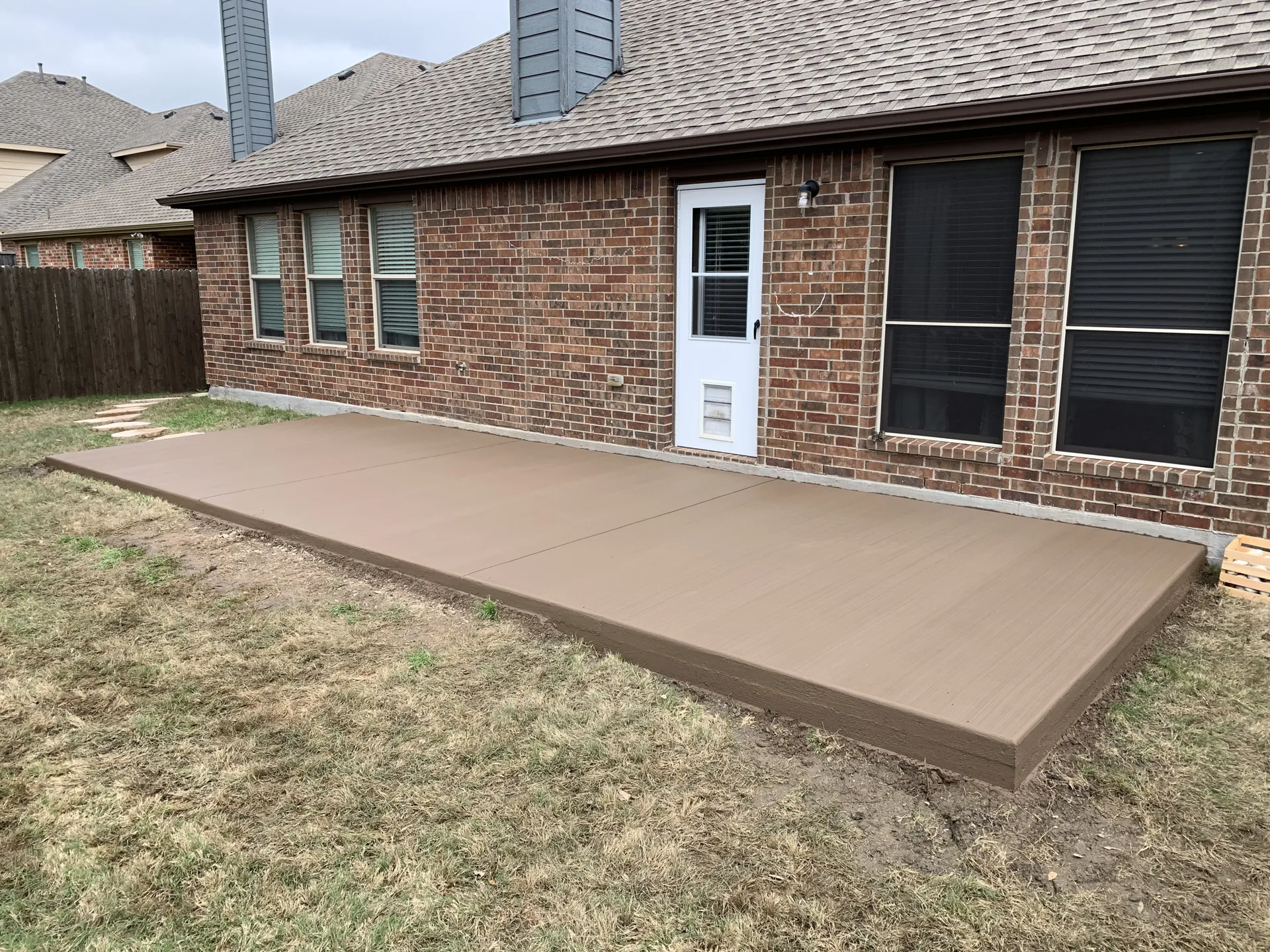
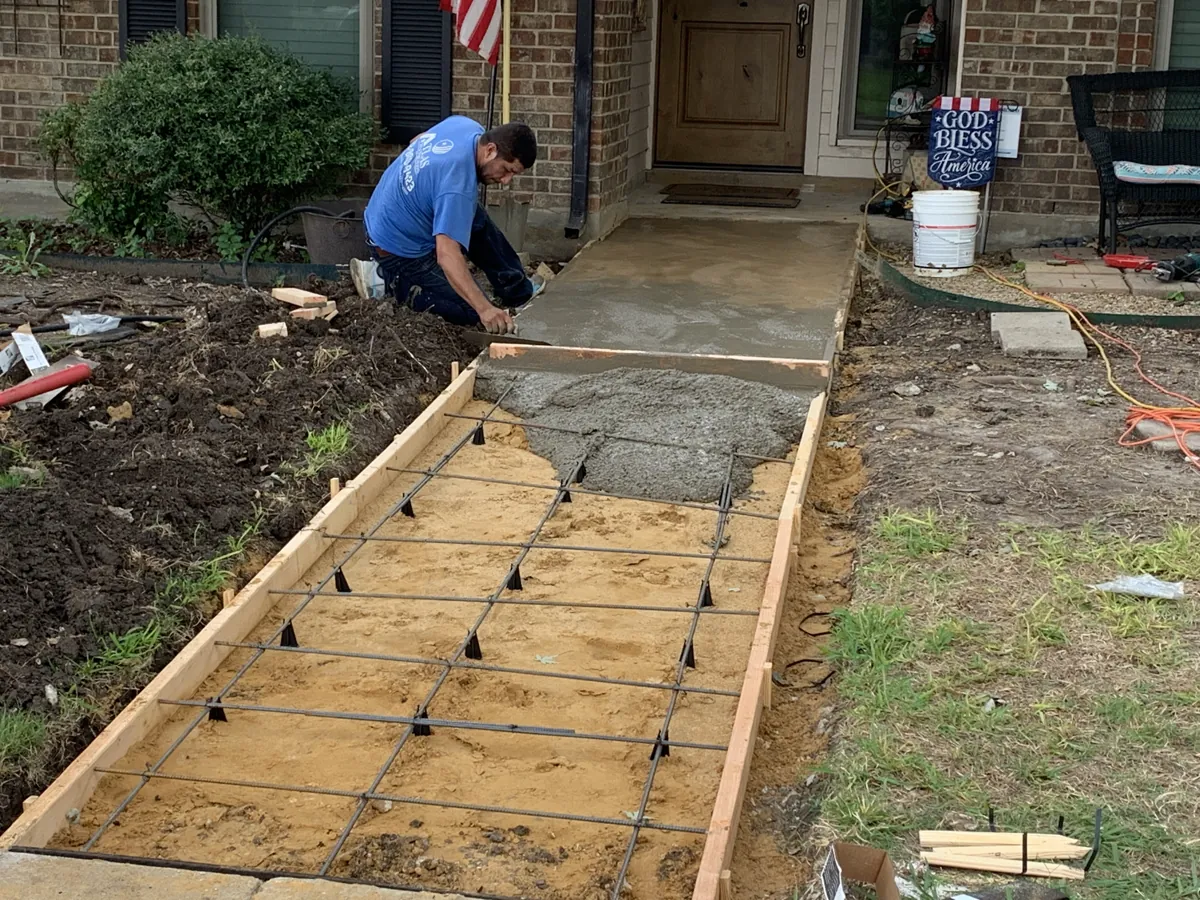
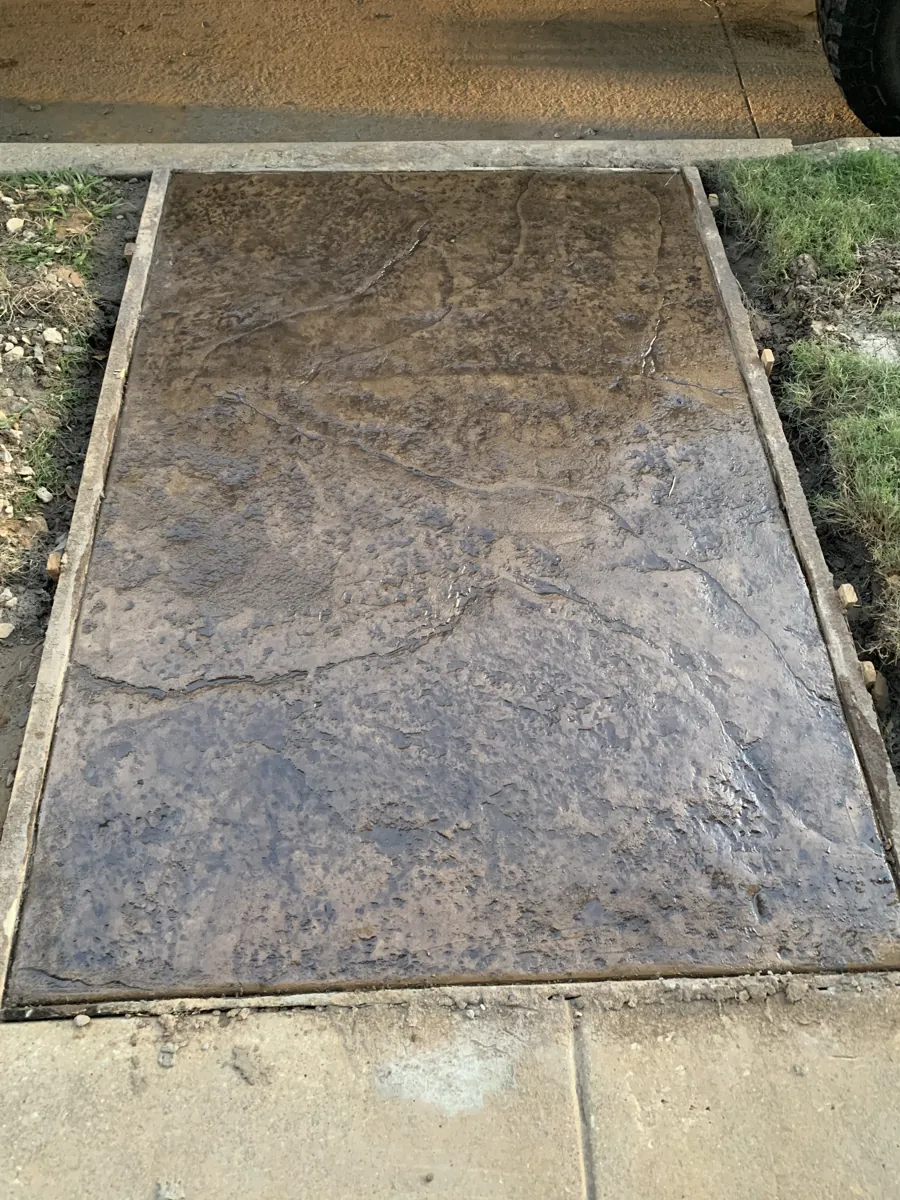
Genuine Longhorn project photographs show concrete work at different stages. They illustrate the visible work, not a universal specification for every property.
It depends on its condition and the cause of the damage. Surface deterioration, settlement, drainage and adjoining work should be considered. A cosmetic repair does not necessarily correct underlying movement.
No. Thickness should follow intended use, anticipated loading, site conditions and the project specification. The written scope should identify the applicable thickness.
No. Reinforcement and tie-ins are selected for the project. Rebar, welded-wire reinforcement and fiber are not interchangeable universal requirements, and reinforcement does not eliminate all cracking.
Concrete depends on the support beneath it. The scope should identify the preparation, grading, fill, base and compaction needed for the site rather than assume the same preparation everywhere.
Planning considers the concrete area, nearby structures, adjoining grades and existing drainage. Additional drainage systems or gutter changes are included only when specified.
The work area and use, dimensions, preparation, thickness, reinforcement, concrete specification, drainage, joints, finish, removal/disposal, exclusions and price.
Follow the instructions for the particular project. Walking, vehicle traffic and heavier loading can require different timing, depending on the concrete, curing conditions and intended use.