
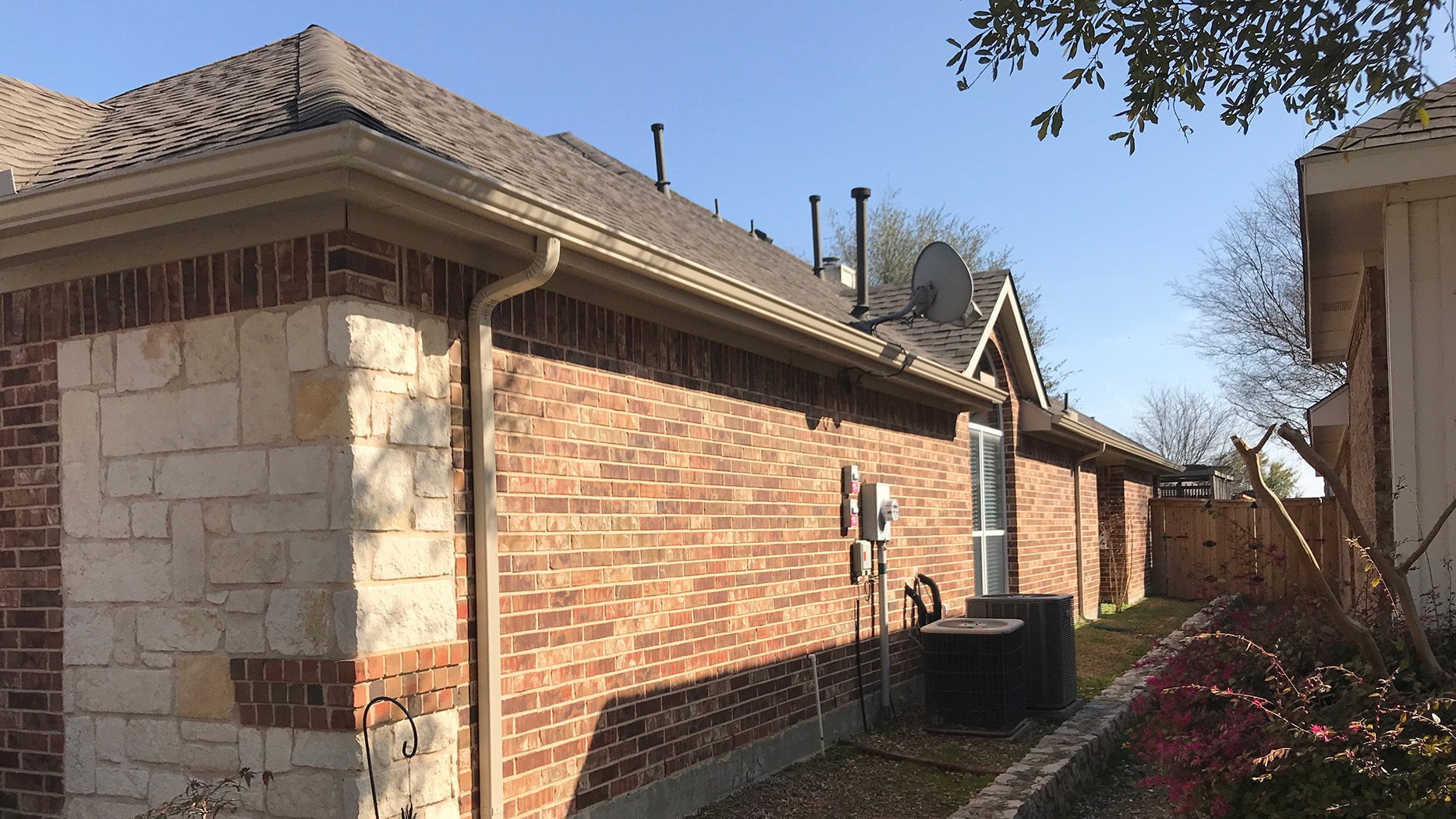
Start your fall gutter review with a simple goal: create a clear record for a professional inspection. Walk accessible areas of your property, photograph visible concerns and label them by location. Leave ladders, roof access, gutter cleaning and elevated repairs to a professional.
You do not need to diagnose anything during this walk. Write what you observed, when you observed it and what you want explained. Use the checklist below to prepare your inquiry, compare the proposed work with your concerns and keep a record after service.
1. Map what you can see
According to Pacific Northwest National Laboratory’s gutter and downspout guide, gutter channels collect roof runoff and downspouts carry that water to ground level. Use the PNNL gutter and downspout guide for background, then sketch the sides of your house and number each visible downspout.
- Can you identify each downspout and its visible outlet? Give each one a location label so your photographs and inspection questions refer to the same place.
- Which gutter sections are outside your view? Mark them “not observed” and request professional photographs rather than recording them as clear.
- Where have you noticed concerns previously? Add approximate dates and distinguish remembered observations from today’s notes.
Keep labels simple: “front left corner,” “garage side” or “back patio.” Take a wider photograph that establishes the location before photographing a particular concern. Use the same labels throughout your service request.
2. Turn visible debris into cleaning questions
From an accessible ground position, record leaves, twigs or other material you can actually see. Describe the location and appearance without estimating how much material is inside a concealed gutter section.
- Is material visible above the gutter edge? Ask the inspector to photograph the interior and explain the proposed cleaning scope.
- Do you have gutter guards? Ask what inspection and maintenance the provider recommends for your existing product, and request the reason.
- Will cleaning include every gutter run, downspout and accessible outlet? Ask the provider to identify included areas and any exclusions.
- What record will show completion? Request photographs or inspection notes tied to your location labels.
Choose a date for your fall review and set a reminder to reassess visible conditions later in the season. Ask the provider to recommend a follow-up schedule after inspecting your home. Keep that recommendation with the explanation, rather than adopting a generic cleaning interval.
3. Document appearance without assigning a cause
Look for anything you want a professional to explain: an uneven line, an apparent gap, a disconnected piece or discoloration. Photograph the observation from the ground and describe it plainly. For example, write “dark mark below the garage corner” rather than naming a leak source.
- Does a section appear lower than its neighbor? Request an assessment of alignment and attachment, with photographs of the inspected area.
- Does a connection appear separated? Ask which components need attention and where they appear in the proposed scope.
- Is there staining on the gutter, fascia or wall? Ask what evidence supports the explanation and what remains uncertain.
For each observation, ask whether the recommendation is cleaning, repair, further investigation or monitoring. If useful detail cannot be photographed from your ground position, record that limitation and request closer professional documentation.
4. Trace the visible discharge route
PNNL explains that gutters and downspouts direct rainwater away from a home to reduce soil saturation around its foundation. Include each outlet in your review. Follow only the visible route, without digging, disconnecting piping or attempting your own flow test.
- Where does the outlet end relative to the house? Record its location and ask whether the existing discharge arrangement suits your property.
- Does the downspout enter underground piping? Ask where that piping terminates and how the provider will evaluate its condition.
- Is an extension displaced or awkward during yard use? Ask for a recommendation that considers drainage and everyday access.
- If you use a rain barrel, where does overflow go? Ask the provider to include that route in the inspection.
PNNL’s guide says rainwater harvesting systems need drainage that manages overflow. Request an explanation of the complete route, including any portion beyond the visible container or piping.
5. Record rainfall observations safely
If you can observe rainfall from indoors or a sheltered, safe ground location, note where water appears. Skip this step when conditions make observation unsafe. Use existing photographs and request a dry-weather inspection instead.
- Where did water pass over an edge or appear beside a connection? Record the location and whether you have observed it more than once.
- Was water visible at the outlet? Describe what you saw without declaring concealed piping clear or blocked.
- Where did water remain afterward? Photograph the area from a safe position and ask whether broader drainage review is appropriate.
PNNL’s site drainage guidance explains that inadequate site drainage can allow water to pool around a foundation during heavy rain. Its site drainage overview provides context for discussing the surrounding ground alongside gutter observations.
6. Request a scope that answers your questions
Bring your numbered sketch, photographs and unanswered questions to the inspection conversation. Start with Longhorn’s gutter and fascia service page, then request a written explanation tied to the locations you documented.
- Which areas need cleaning, and exactly what will that service include?
- Which areas need repair, and what inspection evidence supports the recommendation?
- Which outlet or drainage questions require additional evaluation?
- What will the provider check and document after completing the work?
Ask the provider to distinguish observed conditions from items that remain unconfirmed. If the proposal includes work beyond your original concerns, request the reason before deciding. Keep the inspection record and written scope together for comparison.
7. Close the loop after service
Save your initial notes, inspection photographs, agreed scope and completion documentation in one folder. Revisit the same ground-level viewpoints after service and during a later safe observation opportunity. Note whether your original concern appears again and share that record with the provider.
To discuss your checklist, send Longhorn a gutter inspection inquiry. Include the affected side of the house, your observations and the questions you want answered. Request professional documentation for areas you could not see.