
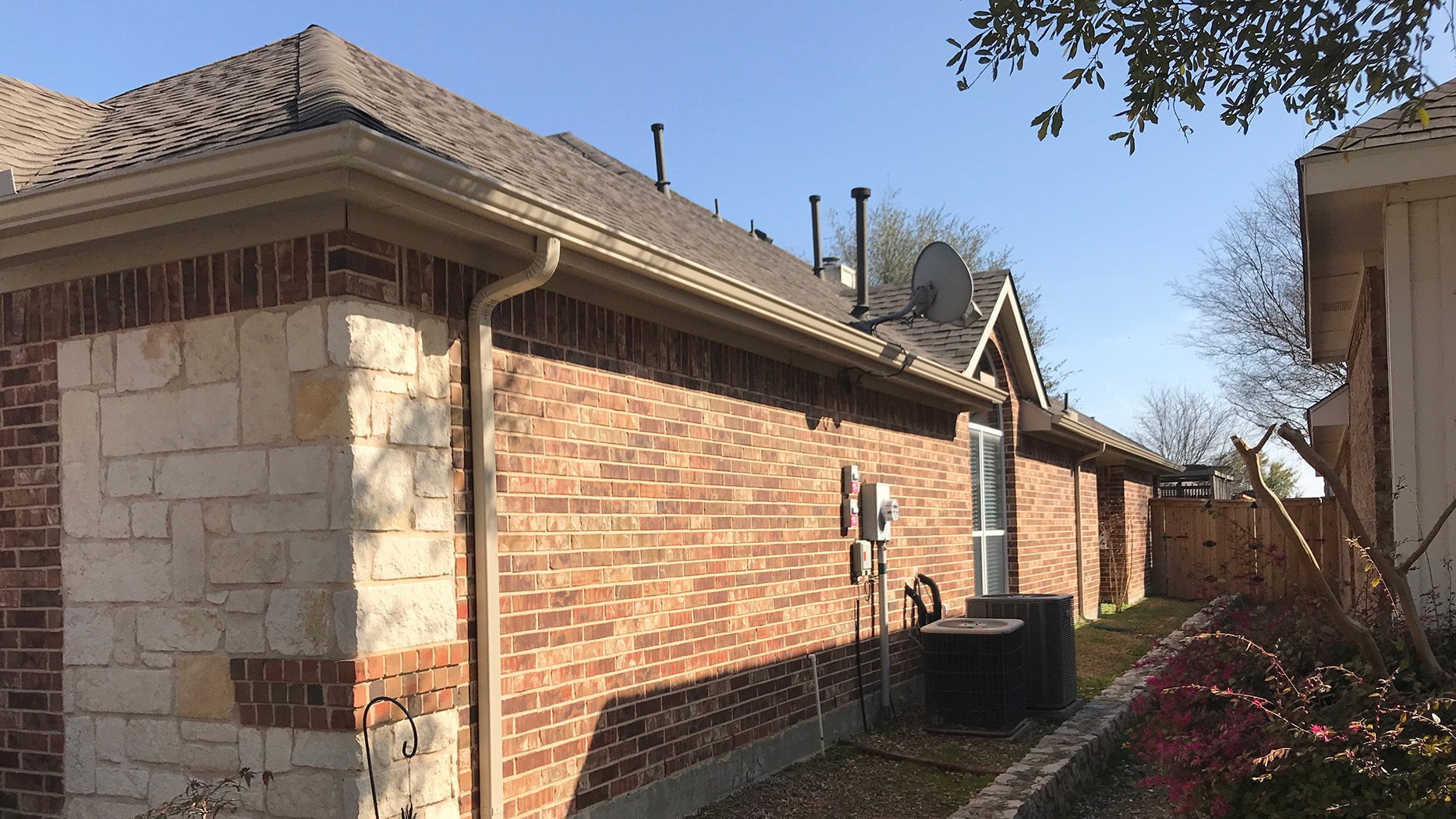
A proposal for new gutters should give you a clear way to evaluate any accompanying fascia work. Which areas need attention? What did the contractor observe? What remains uncertain? Before approving the project, ask for those answers in writing, with photographs tied to specific locations on your home.
For Longhorn homeowners, the useful starting point is a coordinated discussion of gutter and fascia services. Use the questions below to request a scope that explains the proposed work, the reasons for it and the decisions that may still need your input.
Ask what the inspection actually established
Request a location-by-location inspection summary rather than accepting a general note such as “repair fascia as needed.” Ask the contractor to label photographs by elevation or landmark: front entry, driveway side, rear patio or another recognizable feature. You should be able to match each proposed repair to the inspection record.
- Which fascia sections were examined, and which could not be evaluated?
- What observation supports each proposed repair?
- Does the recommendation concern the surface finish, the board itself or something behind it?
- Which conclusions are confirmed, and which require another inspection stage?
The purpose is to distinguish an observed condition from a preliminary allowance. Ask for both close photographs and wider views so you can understand the location. Have the contractor obtain any elevated inspection images; review them from the ground rather than trying to reach the roof edge yourself.
Separate the repair recommendation from the moisture explanation
PNNL’s flashing guide explains that missing flashing can allow water intrusion and concealed damage or rot. Ask whether the inspection identified a water-entry concern relevant to the proposed fascia repair, and request the evidence behind that explanation.
Useful questions include: “What do you think caused the condition here?” and “What observation supports that conclusion?” Follow with: “Does this scope address that concern, or is another assessment needed?” These questions ask the contractor to explain the reasoning without treating every stain or finish defect as the same problem.
Ask for unresolved causes to be listed explicitly. If the contractor recommends proceeding before a cause is confirmed, request an explanation of that choice and the follow-up plan. Your decision should reflect what the inspection established, with uncertainty visible in the proposal.
Define where fascia work begins and ends
Ask for the proposed repair boundaries in recognizable terms, supported by a marked photograph or simple elevation sketch. A total quantity alone is less useful for your review than a quantity paired with locations. Request separate descriptions for areas proposed for repair, replacement, refinishing or further evaluation.
- Where does each proposed repair start and stop?
- What material and finish are proposed for each location?
- Which adjoining trim or surfaces are included?
- What nearby work is excluded from the proposal?
- What inspection finding would change these boundaries?
These details give you a consistent basis for comparing proposals. If two contractors recommend different amounts of fascia work, ask each to explain the difference using their inspection findings. Avoid deciding solely by the larger or smaller quantity; request the reasoning that connects the quantity to your home.
Request a clear review of the gutter and flashing relationship
According to PNNL’s roof and wall flashing guide, roof-edge drip flashing should direct water into the gutter rather than behind it. Ask the contractor to explain how the proposed gutter and fascia work will be evaluated together at that junction.
Request answers to specific questions: “What is the condition of the existing drip edge?” “Is flashing work included?” and “Who will review the relationship between the roof edge and the new gutter?” If the answer refers to another contractor, ask who will coordinate that review and document the result.
For any roof-to-wall junction within the project area, ask whether kick-out flashing needs evaluation. PNNL describes kick-out flashing as a way to direct roof runoff into a gutter at a roof-to-wall junction. Request a location-specific explanation rather than assuming the same detail applies everywhere.
Put the sequence and decision points in writing
Ask the proposal to identify the intended order of work: existing gutter removal, inspection review, agreed fascia work, finish work, gutter installation and final review. Treat this as a scheduling and responsibility discussion, with the contractor explaining the sequence appropriate to the proposed project.
Include a decision point for any conditions requiring additional evaluation after removal. Ask: “Will I receive photographs and a revised description before additional work proceeds?” Also request the name or role of the person responsible for explaining those findings and collecting your decision.
If separate crews are involved, ask who confirms that each stage is ready for the next. The purpose is to make responsibilities explicit. Request a written explanation of how schedule changes, unfinished areas and questions between crews will be handled, including whom you should contact for an update.
Follow the drainage discussion beyond the fascia
PNNL’s gutters and downspouts guide explains that gutter channels collect roof runoff and downspouts carry it to ground level. The guide also advises sizing gutters and downspouts for anticipated water loads. Ask what assessment supports the proposed sizes and downspout locations for your home.
Then ask the contractor to identify the intended discharge destination for every downspout. Which existing outlets will remain? Are extensions or underground connections included? Who will evaluate an existing connection if its condition or destination is uncertain?
PNNL emphasizes directing discharged water away from the building rather than back toward it. Request a drainage explanation that follows the proposed route to its destination. Ask how the layout accounts for walkways, gates and routine yard access so you can evaluate the proposal against how you use the property.
Agree on what the final review will show
Before work begins, request a completion checklist tied to the approved scope. Ask for photographs of the agreed fascia areas, documentation of any approved changes and an explanation of how gutter drainage will be checked. Request clarification of any item that will remain unresolved at the final walkthrough.
Keep the proposal, inspection photographs and subsequent revisions together. During the review, compare the completed work with those records and ask the contractor to explain any differences. For an initial discussion with Longhorn, send a website inquiry describing the areas of concern and requesting a coordinated gutter and fascia assessment.