
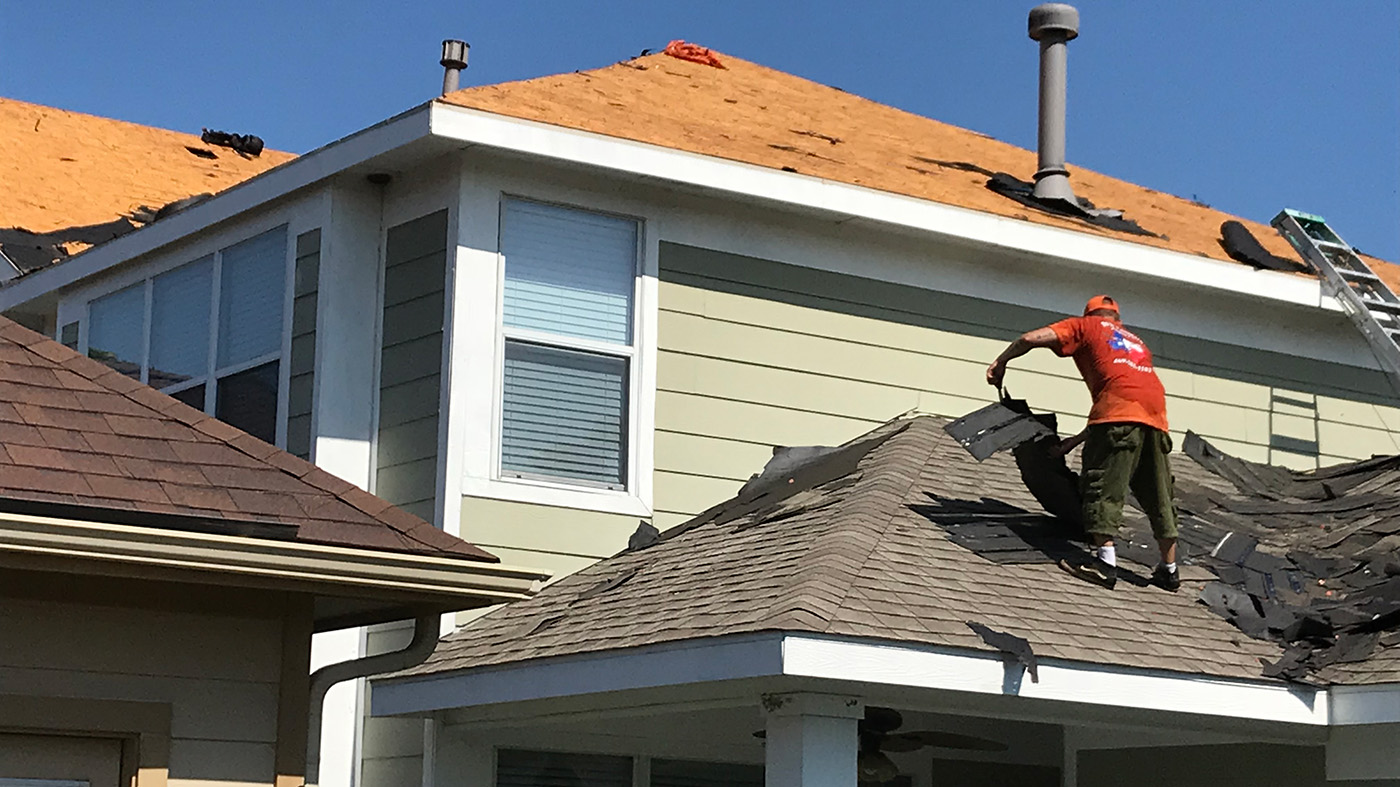
After a North Texas hailstorm, the useful question is not simply whether hail fell in your neighborhood. It is whether the storm damaged your roof covering or another part of the roof system, and what repair is appropriate. Two nearby houses can have different findings because their materials, age, exposure and condition differ. A neighborhood storm report is context; it is not a diagnosis of your roof.
This guide focuses on recognizing possible hail damage to asphalt-shingle roofs. For immediate leak and structural warning signs, use our separate post-storm roof-repair guide. If damage is confirmed and you are considering insurance, our Texas hail-claim guide covers the next process.
Start with a ground-level check after the storm
Wait until dangerous weather has passed. Stay clear of downed wires, hanging limbs and visibly unstable structures. Do not climb onto a wet roof, use a ladder to reach damaged shingles, or press on shingles to see whether they feel bruised. A homeowner check should be observation and documentation, not a hands-on roof test. The National Weather Service thunderstorm safety guidance explains why shelter comes first.
From a safe spot, photograph each visible side of the house. Note the date, where you were standing and which roof slope or elevation is shown. Take a wider view before zooming in. That context makes a close-up useful later and helps avoid confusing damage to a gutter with damage to the roof above it.
Possible hail-damage clues and their limits
- Dents in metal: new-looking dents in accessible downspouts, gutters or visible roof accessories can support a report of hail exposure. They do not establish that shingles failed or that every slope has the same damage.
- Changes in the shingle surface: localized dark areas, displaced granules or visible impact marks deserve professional evaluation. Do not assume every dark spot is an impact.
- Loose material at ground level: photograph unusual granule deposits where a downspout discharges. You do not need to climb up to inspect the gutter interior.
- New interior water marks: document their location and arrange prompt help. Water entry calls for investigation, but the stain alone does not identify hail as the cause.
GAF describes damaged shingles, granule loss and roof penetrations among the things a professional checks after a storm. Some impact damage is difficult to recognize from the ground. Its storm-damage inspection guidance supports following a safe exterior check with a qualified inspection when concerns remain.
What can look like hail damage?
Normal aging, surface wear, earlier repairs and other sources of damage can complicate the picture. Granules at a downspout are not, by themselves, proof of a recent hail loss. Dark staining is not the same finding as a fractured shingle. Likewise, a roof that is not leaking is not automatically undamaged. Ask the inspector to distinguish an observation from the conclusion drawn from it.
A useful explanation sounds like: "Here is the area, here is the physical condition we found, and here is why we recommend this repair." It should not depend entirely on the fact that a neighbor is getting a new roof. Keep older roof photographs, invoices and inspection records if you have them; they may help establish what changed.
What to ask for in a roof inspection
- Photos labeled by roof area, with enough context to locate the finding.
- A distinction between shingle damage, accessory damage and unrelated maintenance.
- An explanation of any uncertain findings or areas that could not be safely accessed.
- A written scope identifying the proposed work and why that scope fits the condition.
- Separate discussion of urgent water control and the permanent repair.
Longhorn's roofing services include inspection, photo documentation and storm-damage work. Describe what you noticed when requesting an appointment, rather than deciding in advance that the job must be a replacement.
Does hail damage always require a new roof?
No. The appropriate scope may involve an accessory repair, a limited shingle repair or broader replacement. Material condition, the extent of actual damage and whether a durable compatible repair can be made all matter. Ask what a repair would address, what it would leave untouched and how the proposed work fits the existing system.
Compare a roof repair scope with a residential roof replacement scope only after the findings are clear. Do not treat a roof's age or a single photograph as a universal replacement rule.
Keep the roof finding separate from coverage
A contractor can document roof conditions and describe construction work. Coverage, deductibles and settlement depend on the policy and the insurer's review. The Texas Department of Insurance roof guide explains why policy terms matter. Texas also prohibits contractors from offering to waive, rebate or absorb a property-insurance deductible; a contractor doing the work cannot act as the public adjuster on that claim. See TDI's roofing and insurance guidance.
Your next step
Write down what changed, save the photographs and request a roof-specific assessment. If there is an active leak, explain that when you call so the immediate issue can be addressed. Tell Longhorn about your roof and include your property location and the observations you can safely make. You do not need to diagnose the damage before asking for help.