
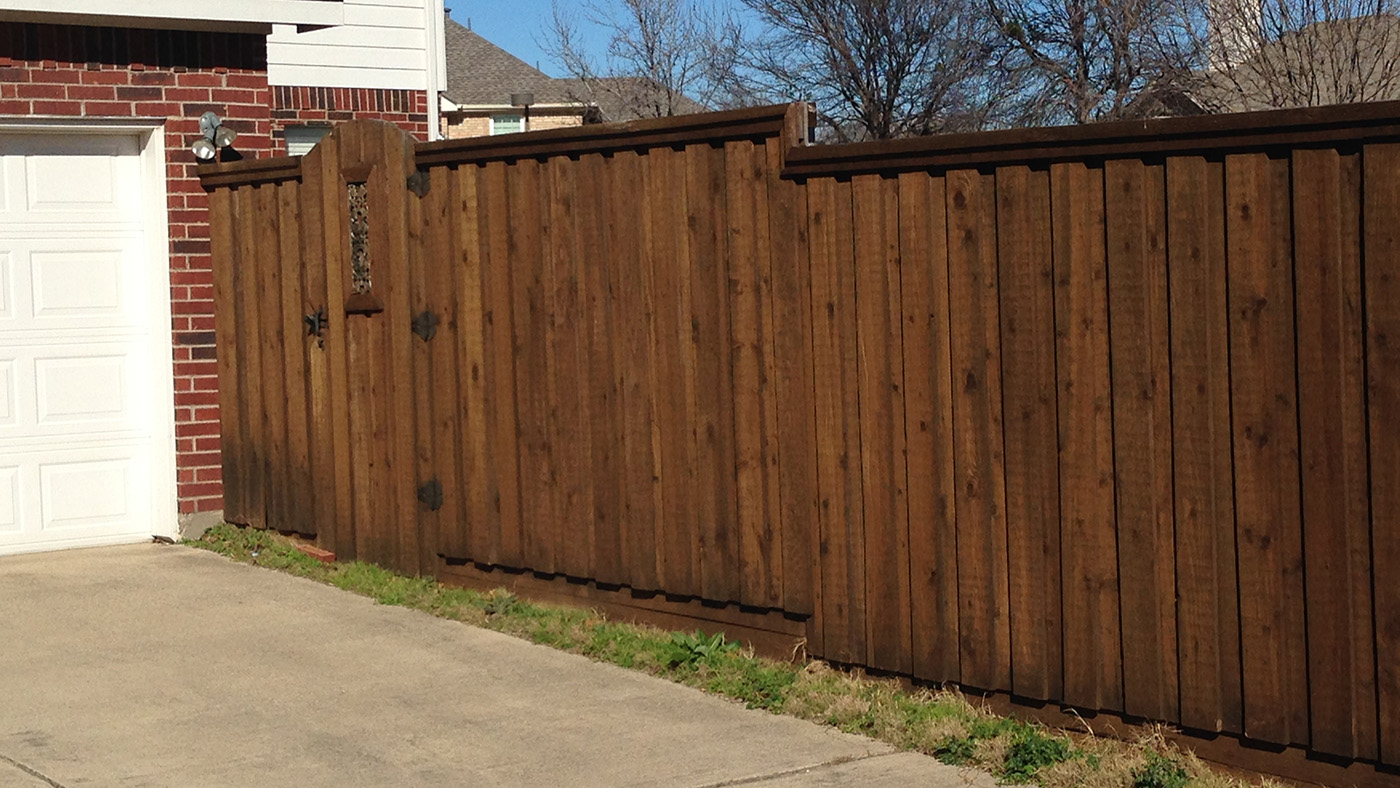
A backyard privacy fence and an open ornamental boundary solve different problems. Comparing their prices without first deciding what the fence must do can lead to an attractive estimate for the wrong project. In North Texas, start with privacy, gates, pets, access and the appearance you want. Then compare the construction details and likely upkeep.
"Metal fencing" also needs a definition. An ornamental steel panel, an aluminum panel and chain-link are different systems. This guide focuses on wood privacy fencing versus ornamental steel or aluminum, while explaining why the actual specification matters more than a broad material ranking.
Begin with privacy and use
Wood boards can provide a largely solid visual screen, depending on their arrangement. Open ornamental metal preserves sightlines but normally provides little privacy. Adding screening later changes the design and can affect wind loading; discuss that goal before selecting posts and panels. A fence intended for a pet also needs suitable gaps and a secure bottom edge, not just a preferred material.
Consider gates early. Note where equipment must pass, how a gate should swing and whether a slope affects its movement. If you need a pool barrier, the specific layout, gate and applicable requirements need review; choosing metal by itself does not establish compliance.
| Priority | Wood | Steel or aluminum |
|---|---|---|
| Visual privacy | Board layouts can provide screening | Open ornamental panels retain views |
| Appearance | Wood grain, stain and board pattern | Panel profile, spacing and finish |
| Upkeep focus | Moisture exposure, boards, finish and fasteners | Coating condition, connections and gate hardware |
| Repairs | Individual boards may be replaceable | Matching panels or finish systems may be needed |
| Cost comparison | Specify species, grade and complete framing | Specify metal, section sizes and protective finish |
What determines installed fencing cost?
There is no defensible single North Texas price that covers all wood or all metal fencing. Compare written proposals for the same measured length, height, gates and site conditions. A short run with a large custom gate can cost very differently from a long uncomplicated boundary, even when both use the same fence material.
For wood, ask for the species or treatment, board dimensions and grade, rail layout, post specification and whether finishing is included. For metal, ask whether the system is steel or aluminum, what panel grade and section sizes are proposed, and how exposed cuts or connections are protected. Jerith's aluminum fence specification guide illustrates that picket, rail and post dimensions vary between product lines. One aluminum quote is not necessarily equivalent to another.
Request separate treatment of demolition, hauling, vegetation removal, difficult access and gate work. Clarify how unforeseen site conditions are handled. The useful comparison is the installed scope plus expected maintenance and repairs, not simply the initial material price. Longhorn can discuss these options through its fence installation and repair service.
Wood durability depends on exposure and care
Wood responds to moisture, sunlight and weathering. Species, treatment, construction and exposure affect the result; not every wood board ages the same way. Keep an eye on loose boards, deteriorated areas and hardware, and address recurring moisture problems rather than only covering the surface.
The USDA Forest Service's wood-finishing guidance explains the relationship between outdoor exposure, moisture and finishes. Choose a finish suited to the actual wood and follow its preparation and maintenance instructions. A coating is not a repair for a structurally unsound member.
A homeowner who likes wood's appearance but will not maintain a finish should make that preference explicit before ordering. Ask what unfinished weathering will look like and what structural upkeep remains necessary. Avoid relying on a universal restaining interval or promised lifespan without knowing the product and exposure.
Steel and aluminum are not interchangeable
For steel, the corrosion-protection system matters. A description such as "black metal" does not tell you whether the product is galvanized, how it is coated, or what happens at fabrication and connection points. The American Galvanizers Association recommends field inspection of hot-dip galvanized products as part of maintaining corrosion protection. Ask how damage to the proposed coating should be repaired.
Aluminum avoids the iron-rust issue associated with exposed steel, but its finish, connections and gate hardware still deserve inspection. Do not translate "low maintenance" into "indestructible." For one manufacturer's example, Jerith's aluminum warranty distinguishes normal usage from physical damage or abrasion and gives gates separate treatment. That is a reason to read the exact product warranty, not a warranty promise for every metal fence.
Evaluate the site, not just the sample panel
On a North Texas property, check the actual slope, drainage, sprinkler exposure, trees and gate clearances. Ask the installer to explain how the line follows grade and how the posts and gates fit the conditions encountered. A good material cannot compensate for a poorly planned gate or an unsuitable attachment detail.
Verify the property line and relevant restrictions before finalizing the layout. Do not assume an old fence establishes the legal boundary or that a neighbor's approval replaces required municipal or association review. This is a planning checkpoint, not a substitute for site-specific approval.
A practical way to choose
- Prioritize a screened backyard? Compare wood privacy layouts and their maintenance requirements first.
- Want an open view? Compare specified steel and aluminum systems, including gates and coatings.
- Have localized damage? Ask whether a compatible repair makes sense before replacing the whole line.
- Comparing bids? Match length, height, posts, gates, removal and finish before comparing totals.
For broader property work, Longhorn's outdoor living services can be discussed alongside the fence scope. Request a fencing estimate with your property location, priorities and any gate requirements. Photos taken safely from your property can help explain the starting condition without committing you to a particular material.